
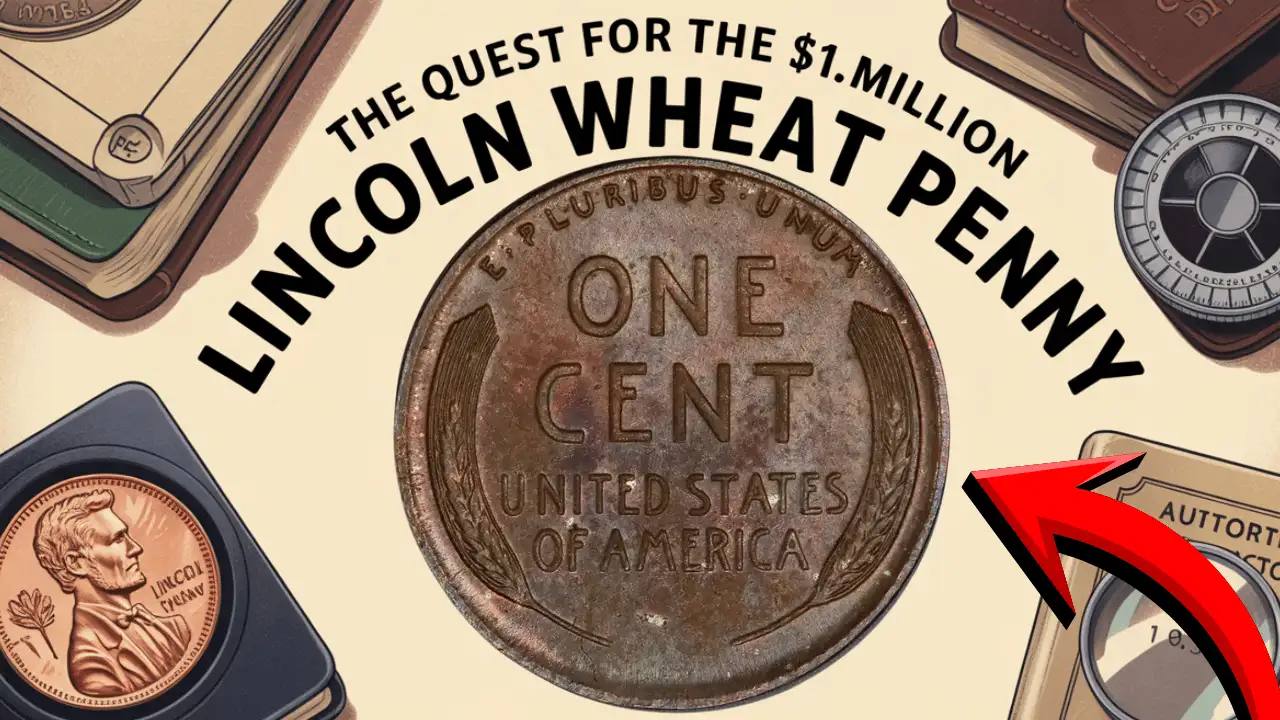
Few coins spark as much fascination among collectors as the Lincoln Wheat penny — especially when headlines mention figures like “$1.23 million”. While that number catches the eye, it’s important to understand why a Wheat penny could reach those heights, what makes it rare, and how serious collectors think about value.
This guide explains the history, the specific coins that command attention, how grading drives value, and what to watch for if you think you’ve found something special.
What Is a Lincoln Wheat Penny?
The Lincoln Wheat penny was produced from 1909 to 1958 and was the standard one-cent coin in the United States for nearly 50 years. Designed by Victor David Brenner, it was the first U.S. coin to depict a real person — President Abraham Lincoln — and its reverse featured two wheat stalks, giving it its nickname.
Because millions were minted and circulated for decades, most Wheat pennies are common today. But some key dates and mint varieties are extremely rare, and those are the ones that can command big prices.
Why a Wheat Penny Could Be Worth Over $1 Million
Before we get into specifics, it’s important to clarify:
Not all Wheat pennies are worth a fortune.
Most are worth a dollar or two in pocket change. But a very few extremely rare specimens, especially at very high grades or with certain errors, have sold for prices approaching or exceeding seven figures.
Factors that drive extreme value include:
- Very low mintage or production errors
- Top-tier condition (graded MS67, MS68, or higher)
- Proof-only or experimental strikes
- Historical significance
- Competition among advanced collectors
It’s this combination of scarcity + condition + demand that can push a rare penny into million-dollar territory.
The Most Famous Million-Plus Lincoln Wheat Penny: 1943 Copper
The coin most associated with million-dollar values is the 1943 Lincoln Wheat penny struck in copper.
Why It’s Rare
In 1943, most pennies were made from zinc-coated steel because copper was needed for World War II. That made the 1943 copper penny an anomaly — an unintentional carryover from the 1942 dies.
Only a handful of these coins are known to exist, and very few in high, certified grades.
Auction History
Examples of the 1943 copper penny have sold for extremely high prices:
- One specimen graded MS66RD reportedly sold for $1.23 million+.
- Other premium examples have fetched hundreds of thousands at auction.
These results are exceptional — they represent collector competition for a world-class rarity.
Other High-Value Lincoln Wheat Pennies
While the 1943 copper issue is the headline grabber, there are other scarce or high-value Wheat pennies, especially in top condition.
Key Dates and Varieties
| Year / Variety | Why It’s Valuable | **Value Range (Approx.) |
|---|---|---|
| 1909-S VDB | Low mintage; first year issue | $5,000 – $200,000+ |
| 1914-D | Scarce Denver mint | $4,000 – $150,000+ |
| 1922 Plain (no D) | Very low mintage anomaly | $10,000 – $300,000+ |
| 1931-S | Low survival rates | $2,000 – $100,000+ |
| 1944 Steel | Transitional error | $3,000 – $40,000+ |
| Error / Experimental Strikes | Rare striking varieties | Varies widely; some $10,000+ |
Values vary dramatically depending on condition, grade, and market demand.
The Power of Grading: Why Condition Matters Most
Condition — or grade — is arguably the single most important factor in rare coin value. Two pennies with the same year and mint mark can be worth drastically different amounts if one is worn and the other is crisp with original luster.
Common Grading Terms
- Good (G–4): Heavy wear
- Very Fine (VF–20): Moderate wear, details visible
- Extremely Fine (EF–40): Light wear
- Mint State (MS60+): No circulation wear
- Proof (PR): Special collector strikes
High grades like MS67, MS68, and rare proofs are incredibly scarce for early Wheat pennies and are often the ones that reach the highest prices.
Professional services like PCGS and NGC certify and grade coins, and certified high-grade examples are more likely to reach premium auction prices.
Error Coins and Oddities That Collectors Prize
Rare Lincoln Wheat pennies aren’t just about date and mint mark. Errors and oddities can sometimes be just as valuable — especially if they’re dramatic and authenticated.
Examples of Valuable Errors
- Off-Center Strikes
- Double Dies
- Die Breaks or Cracks
- Clipped Planchets
- Wrong Planchet Errors
Unlike the famous 1943 copper anomaly, these errors usually still show millions of normal coins produced, but the specific misstruck pieces are rare and sought after.
How the Market Sets Value
Rare coin pricing is not fixed — it responds to:
- Auction results
- Collector demand
- Economic trends
- Historical interest
- Overall rarity of top grades
For example, a rare 1909-S VDB in MS67 could sell for hundreds of thousands because collectors know only a handful exist in that condition.
A 1943 copper penny in MS66+ can hit $1 million+ precisely because:
- it’s very rare
- it’s certified in top condition
- there’s high competition among advanced collectors
Smaller errors or coins in lower grades simply don’t attract that level of interest.
How to Tell If Your Penny Could Be Valuable
Here’s a simple checklist:
✔ Check the date and mint mark
✔ Look for unusual weight or color (possible error)
✔ Avoid cleaning — cleaning reduces value
✔ Compare with known rare varieties
✔ Get professional authentication if you think it’s special
If your penny seems unusual, the next step is often to submit it to a respected grading service (PCGS, NGC, or ANACS) for certification.
Realistic Expectations for Modern Collectors
A headline grabbing $1.23 million can make headlines, but it represents extreme cases — not typical outcomes.
Most Lincoln Wheat pennies you’ll find are worth:
- Face value ($0.01) if circulated
- A small premium if uncirculated
- More in rare dates/grades, often hundreds or thousands of dollars, not millions
Only a very small number of premium certified rarities ever reach the highest values.
Final Thoughts
The quest for a million-plus Lincoln Wheat penny combines history, luck, and careful grading. The true rarities — like the 1943 copper anomaly and a handful of other key dates — show how scarcity and condition can transform a humble penny into a prized collectible.
For most coin hunters, the value lies in the story, the hunt, and the possibility that something ordinary might secretly be extraordinary.
Quick FAQs
A: No. Most are worth face value or a modest premium.
A: Extreme rarity, error/variety, and very high certified grade
A: No — cleaning usually lowers collector value.
A: Through professional grading and certification (PCGS, NGC).
A: At major auctions, dealer networks, and certified marketplace platforms.
